In modern manufacturing, achieving perfect material density can mean the difference between long-term performance and premature failure. The metal densification process has become one of the most crucial technologies in engineering, ensuring that metals can endure high pressure, temperature, and mechanical stress. Among all methods developed to optimize material quality, hot isostatic pressing stands out for its precision and effectiveness.
By combining extreme heat and pressure within a controlled atmosphere, this process removes internal voids and enhances the structural integrity of metals. From aircraft engines to medical implants, it ensures that critical components are both durable and dimensionally stable. Understanding how it works reveals why the metal densification process is indispensable for industries that demand perfection.
Understanding the principles of hot isostatic pressing
At its core, hot isostatic pressing (often abbreviated as HIP) is a metal densification process that uses a combination of heat and gas pressure to eliminate porosity and strengthen metallic parts. In a typical HIP setup, components are placed inside a high-pressure vessel filled with an inert gas, usually argon. The chamber is then heated to near the material’s melting point while pressure is applied evenly from all directions.
This simultaneous action of temperature and pressure causes metal atoms to diffuse and fill internal voids or cracks that may have developed during casting, sintering, or additive manufacturing. The result is a component with near 100% density and exceptional mechanical strength.
For a deeper understanding of how this technology works in real-world applications, you can explore the hot isostatic pressing process and see how it contributes to improved performance and reliability across advanced industries.
How the metal densification process works in practice
The HIP cycle generally consists of three stages: heating, pressurizing, and cooling. During the heating phase, the temperature rises gradually—typically between 900°C and 1250°C—depending on the material. Once the target temperature is reached, gas pressure (ranging from 100 to 200 MPa) is applied uniformly throughout the chamber.
Because the gas applies pressure isotropically—that is, equally in all directions—voids collapse uniformly, and atoms migrate to fill the gaps. This ensures that the densification happens consistently, preventing uneven shrinkage or distortion. After the hold period, the system is slowly cooled under controlled pressure, preserving the improved microstructure and dimensional accuracy of the part.
This uniformity is what sets the metal densification process apart from traditional forging or sintering, which often apply directional forces and can introduce internal stresses or inconsistencies. HIP, by contrast, achieves a truly homogeneous material structure.
The importance of pressure and temperature balance
The effectiveness of the metal densification process depends heavily on maintaining an exact balance between pressure and temperature. Too little heat leads to incomplete diffusion, leaving residual pores, while excessive heat can deform the part or change its composition. Similarly, uneven or insufficient pressure prevents full densification.
Modern HIP systems use advanced sensors and feedback loops to maintain optimal conditions. They regulate pressure and temperature in real time, ensuring that each component—no matter its geometry or size—achieves consistent density. This precise control allows engineers to fine-tune the final microstructure, optimizing properties such as hardness, creep resistance, and fracture toughness.
Industrial applications and advantages
The benefits of HIP go far beyond laboratory research. Across global industries, the metal densification process ensures parts can survive extreme environments while maintaining consistent performance.
In particular, HIP is widely applied in:
- Aerospace engineering, where turbine blades, rotors, and structural components rely on the metal densification process for exceptional strength and fatigue resistance under high stress and temperature.
- The energy sector, which uses HIP to enhance components in nuclear, gas, and oil systems that require durability under high loads and corrosive conditions.
- The medical industry, where implants such as prosthetic joints, dental screws, and spinal devices are treated with HIP to remove defects and ensure biocompatibility and long-term stability.
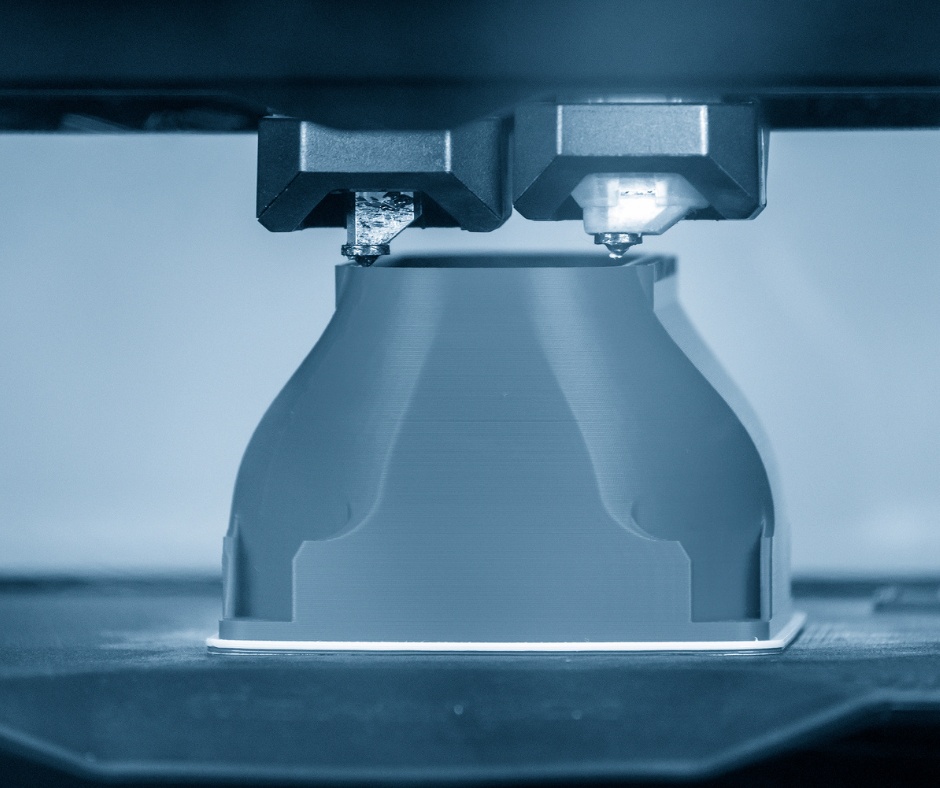
- Additive manufacturing (3D printing), where HIP serves as a post-processing step to eliminate internal voids created during layer-by-layer printing, producing fully dense parts with consistent mechanical properties.
Thanks to these advantages, HIP has become a vital process in sectors where reliability, precision, and material integrity are non-negotiable.
Comparing HIP to other densification methods
While traditional densification methods like forging or cold isostatic pressing can increase density, they often fail to achieve the uniformity of HIP. Mechanical pressure acts in one direction and may create stress points or deform parts.
By contrast, the metal densification process achieved through HIP applies pressure isotropically, ensuring that every section of the component experiences equal compression. This results in consistent grain structure and exceptional homogeneity. HIP can also consolidate powders into fully dense shapes or join dissimilar materials through diffusion bonding—something mechanical methods cannot easily achieve.
Advantages of the metal densification process
The metal densification process offers a unique combination of performance and efficiency. It not only strengthens metals but also streamlines production and reduces waste.
Key advantages of this process include:
- Reduced machining and post-processing: Uniform density minimizes the need for further finishing or rework.
- Shorter production cycles: Fewer manufacturing steps lead to faster turnaround and higher productivity.
- Lower material waste: Near-net-shape production minimizes scrap and optimizes material usage.
- Enhanced mechanical properties: Improved grain structure boosts fatigue strength, hardness, and overall toughness.
- Extended component lifespan: Fully dense materials resist cracking and wear, ensuring longer operational life.
These combined benefits explain why HIP has become an essential step in high-performance production for industries such as aerospace, energy, and medical technology.
Frequently asked questions
What is the main purpose of hot isostatic pressing?
The primary goal is to achieve maximum material density by applying high heat and uniform gas pressure, effectively removing voids and internal defects.
How does it differ from sintering?
Sintering primarily relies on heat to bond particles, whereas HIP combines both heat and isotropic pressure for complete densification and superior uniformity.
Which materials can undergo the HIP process?
A wide variety of materials can be treated, including titanium, nickel-based alloys, stainless steels, superalloys, and even ceramics or composites.
Is HIP used in 3D printing?
Yes. In additive manufacturing, HIP is a key post-processing step to eliminate microvoids and improve the strength of printed metal components.
What are the typical conditions for HIP?
Temperatures usually range from 900°C to 1250°C, and pressures between 100 and 200 MPa, depending on the material.
The future of metal densification technology
As industries seek lighter, stronger, and more efficient materials, the metal densification process continues to evolve. Innovations in HIP technology now include faster cooling rates, more precise pressure controls, and energy-efficient systems that reduce environmental impact.
With its proven ability to enhance material performance, hot isostatic pressing has become a cornerstone of advanced engineering. Whether improving the reliability of aerospace components or enhancing the durability of medical implants, this process ensures that metals reach their full potential—dense, defect-free, and engineered for the toughest challenges.
By mastering the metal densification process, manufacturers can push the boundaries of what’s possible in material science and continue shaping the future of high-performance technology.