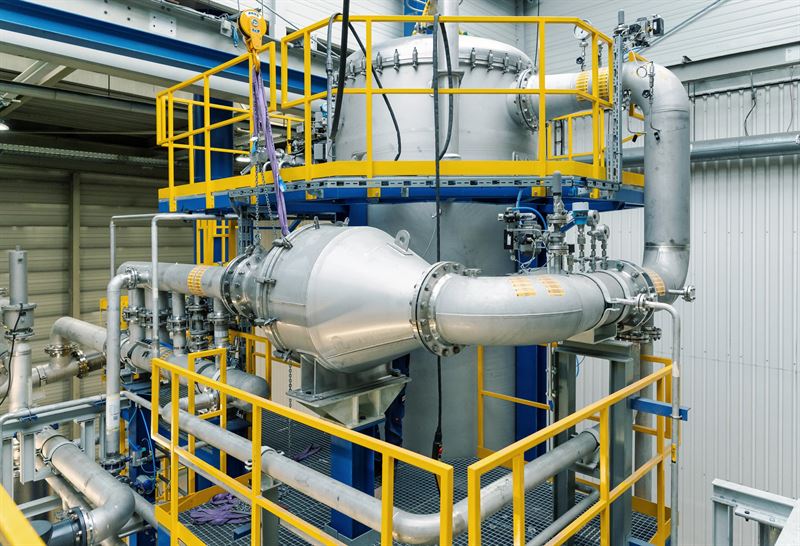
In modern manufacturing, precision, efficiency and repeatability are essential. One production method that meets these demands is powder metallurgy. This technique allows manufacturers to produce complex metal components with minimal material waste and high dimensional accuracy. A crucial stage within this process is sintering, which transforms loose metal particles into strong and functional components.
What is powder metallurgy?
Powder metallurgy is a manufacturing method in which fine metal powders are compacted into a desired shape. Instead of melting and casting the material, the powder is pressed under high pressure inside a mould. The result is a so-called green part, which still lacks mechanical strength. Only after heat treatment does the component reach its final performance characteristics.
The importance of the sintering stage
Sintering is one of the most critical steps in powder metallurgy. During this phase, the compacted powder is heated to a temperature just below the metal’s melting point. This causes the individual particles to bond together, increasing strength and stability without altering the original shape. More technical insight into the Sintering process in powder metallurgy shows how precise temperature control and timing directly influence the final material properties.
Why sintering determines quality
Without proper sintering, powder-based components would remain fragile and unsuitable for industrial use. The sintering process determines density, durability and resistance to mechanical stress. Variables such as atmosphere, heating curves and cooling rates all play a decisive role. This makes sintering a process that requires expertise, consistency and advanced process monitoring.
Industrial applications of powder metallurgy
Powder metallurgy is widely used in industries where reliability and accuracy are essential. Automotive manufacturing, industrial machinery and electrical engineering rely heavily on sintered components such as gears, bearings and structural parts. The ability to produce complex geometries with tight tolerances makes this manufacturing method highly efficient and scalable.
Efficiency and sustainability benefits
One of the major advantages of powder metallurgy is material efficiency. Since metal powders are dosed precisely, waste is kept to an absolute minimum. In addition, sintered components often require little to no post-processing, which reduces energy consumption and production time. A deeper understanding of the Sintering process in powder metallurgy highlights how this technique supports both cost efficiency and sustainable manufacturing practices.
Continuous innovation in metal manufacturing
Ongoing developments in powder composition, furnace technology and sintering control systems continue to improve product quality. Innovations in sintering techniques allow manufacturers to achieve enhanced mechanical properties while maintaining production efficiency. As a result, powder metallurgy remains a future-proof solution within advanced manufacturing.
Sintering as a core technology
The success of powder metallurgy largely depends on a well-controlled sintering process. When executed correctly, it enables the production of high-quality metal components with consistent performance. Sintering therefore remains a key technology that combines precision, efficiency and sustainability in modern industrial production.